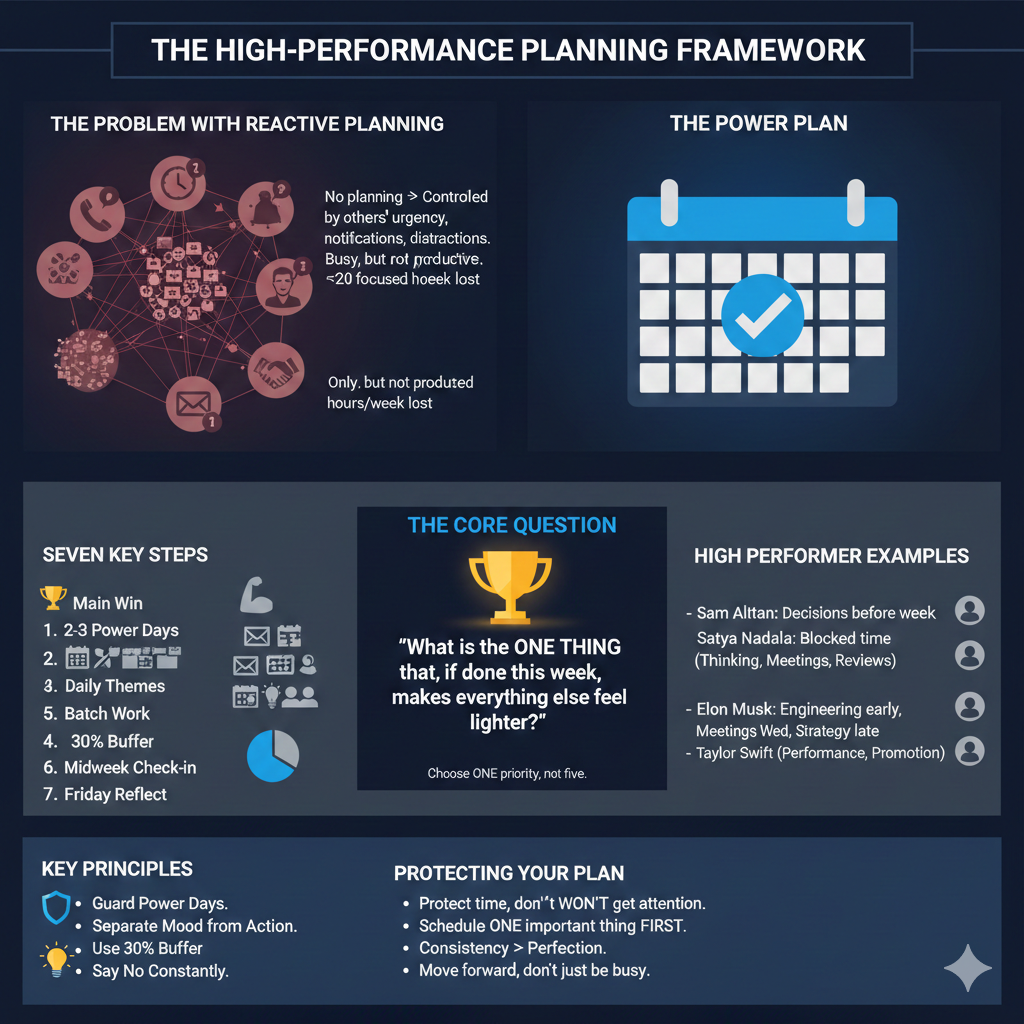
The Problem with Reactive Planning
- Most people don’t plan their weeks – they react to whatever is closest, loudest, or easiest
- Without planning, your week gets controlled by other people’s urgency, your boss’s mood, notifications, and distractions
- People end up being “busy” but not productive – just answering messages and clearing small tasks rather than making real progress
- The average person only has about 20 focused hours per week – controlling those hours changes everything
The Planning Framework
When to Plan
- Plan on Sunday night, not Monday morning – once the week starts, you’re already reacting
- Takes only 30 minutes – short enough to not feel overwhelming, long enough to save your week
The Core Question
- Start by asking: “What is the one thing that, if done this week, makes everything else feel lighter?”
- Choose one priority, not five – when you have five priorities, you have none
Seven Key Steps
- Pick your one main win for the week – the thing that makes everything else feel lighter
- Assign energy to each day – identify 2-3 “power days” when your main win moves forward; other days are for meetings, maintenance, and support
- Give each day a theme – Monday for creating, Tuesday for connecting, Wednesday for reviewing, etc.
- Batch similar work together – don’t scatter calls, emails, or creative tasks across the week
- Leave 30% of your week open for surprises and interruptions
- Check in midweek (Wednesday) – take 10 minutes to assess if your main win is moving forward
- Reflect on Friday night (5 minutes) – review what got done and prep for next Sunday’s planning
Examples from High Performers
- Sam Altman (OpenAI CEO) makes decisions before the week starts, not during
- Satya Nadella schedules thinking, meetings, and reviews in separate blocks
- Elon Musk pushes engineering decisions early in the week, keeps Wednesday for meetings, handles strategy later
- Taylor Swift blocks days for performance and separate days for promotion
- Zendaya batches rehearsals and interviews on different days
Protecting Your Plan
- Guard your power days fiercely – no random calls, quick favors, or group chat distractions
- Batch similar tasks together to avoid energy leaks from constant switching
- Separate mood from action – don’t let emotions derail your plan
- Expect chaos and handle it using your 30% buffer, then return to your main win
- Say no constantly to protect energy for what actually matters
Key Principles
- Real planning is about protecting time, not filling it
- Decide what will not get attention this week – if you don’t, your phone will decide for you
- Schedule your one important thing first, before clearing small tasks
- Perfect weeks don’t exist – consistency beats perfection
- The real win isn’t being busy, it’s what you actually move forward